Immibrand
Immibrand
Case StudyA marketplace for independent artists & artisans. Take a free course. Launch a product. Sell on the marketplace. Look up for relevant creative art grants.
Contents
Overview
Immibrand isn't an immediate replacement. It's an adamant alternative for the outliers who believe this is how we can also fight establishment coercion.
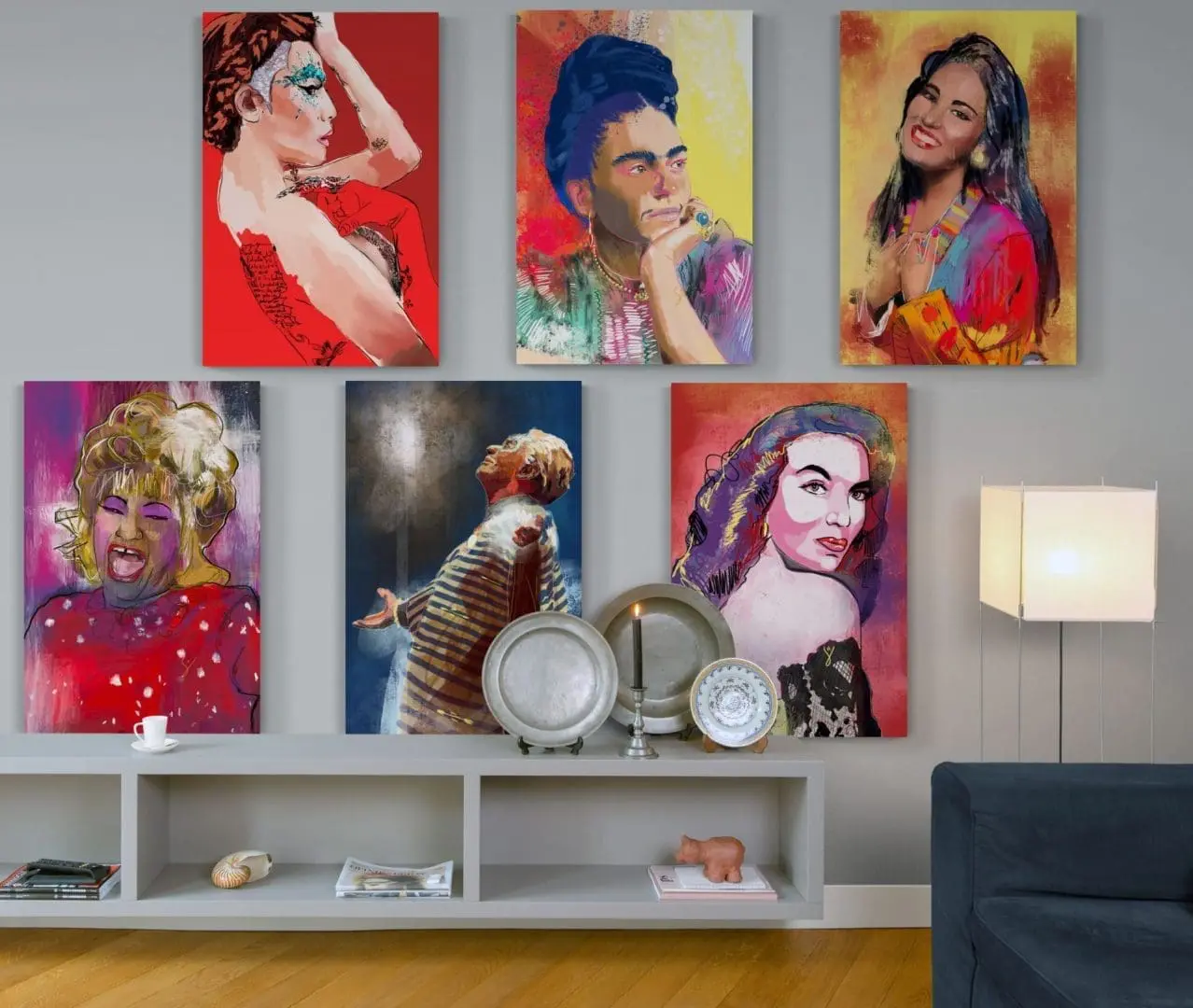
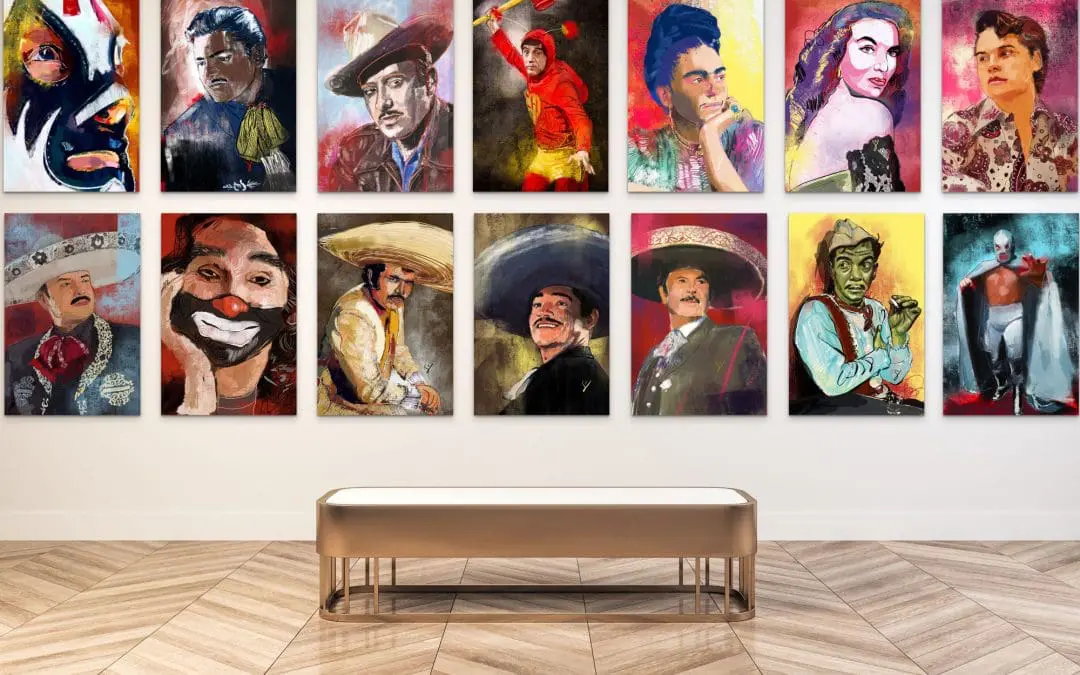
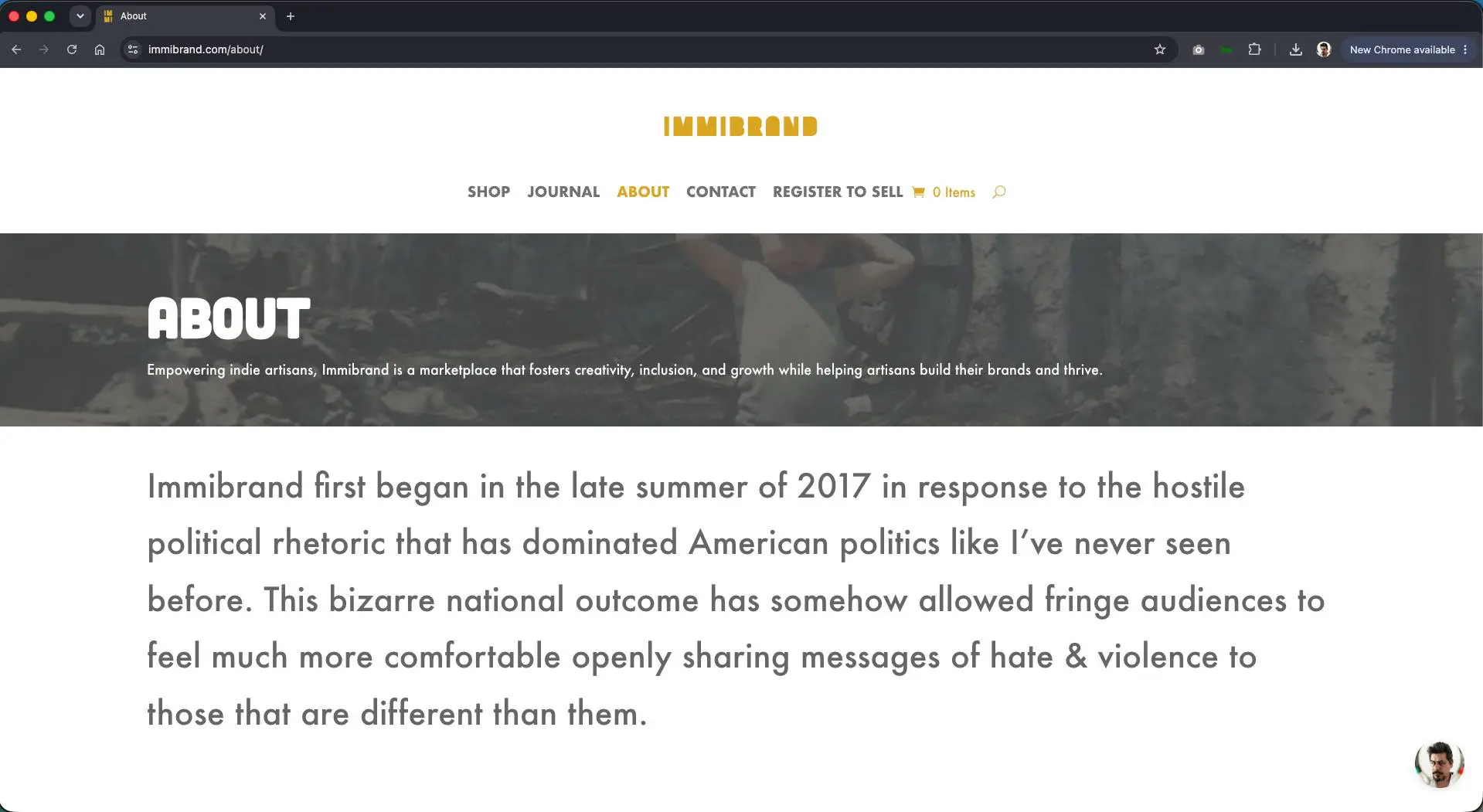
Immibrand started in late summer 2017 as my personal art site, a place to sell portraits of Latin icons. The political climate had turned openly hostile toward immigrants, and selling my own work as a counter-narrative felt like the most direct response I had. It wasn't a marketplace. Just me.
It stayed that way for years. The multivendor pivot happened last year, when I decided to open the platform to other sellers: independent artisans and makers who have the craft but not the tech know-how or resources to build and maintain their own online store. The shift from personal site to marketplace came out of watching what enshittification does to platforms like Etsy and Saatchi Art over time and deciding there was value in building an alternative before those alternatives disappear.
The stack now includes a WooCommerce-based marketplace (currently WCFM, migrating to a custom plugin called F! Gallery), the Labor de Arte physical product line made from foraged invasive plants in the DMV region, a Claude-powered grant discovery tool, and a free course library in Tutor LMS.
This case study documents the decisions behind that build: why certain constraints were chosen deliberately, how the technical and editorial layers were kept coherent, and where the platform is headed.
The framing throughout the platform is consistent: this is not a charity project, and it is not a niche Etsy. It is a commerce infrastructure with a clear editorial point of view. The platform centers immigrant experience and its intersections, specifically immigrant rights, Indigenous sovereignty, and environmental justice. Those three threads run through product curation decisions, feature prioritization, fee structure design, and the tone of every piece of copy on the site.
Mission
Why Etsy isn't enough, and why that matters.
The decision to open Immibrand as a multivendor marketplace came partly from watching what Etsy became. It launched as a home for handmade work and independent makers. Over time, the platform optimized for investor returns and the experience followed: transaction fees climbed from 5% to 6.5%, listing fees stacked on top, forced advertising costs hit high-earning shops, and an algorithm that favored volume over craft let mass-produced and AI-generated goods flood the search results.
Saatchi Art operates in a similar space for visual artists and carries similar structural tensions: a 35% commission on sales, limited seller control, and a platform incentive that prioritizes curation for buyers over economics for the artists doing the work.
Immibrand is not positioned as an immediate replacement for either. The catalog is smaller, the traffic is smaller, and the seller base is intentionally limited to human-made, non-dropshipped work. The alternative it offers is structural: transparent fees, no mandatory advertising, product limits that function as curation rather than extraction, and an explicit commitment to helping sellers build something that works independently of the platform.
What Immibrand does differently.
No listing fees. No mandatory advertising. No mass-produced inventory allowed. The platform fee is a sliding percentage taken only when a sale happens, starting at 10% and scaling with price tier (the full model is in the Economics section).
Product limits are capped per plan tier, not as a revenue mechanism but as an anti-spam and curation mechanism. Keeping the catalog focused prevents the scenario where a single seller floods the shop with hundreds of low-effort listings. Artisans with a curated collection of 20 items are the target, not dropshippers gaming for volume.
Off-platform visibility is surfaced deliberately. Social links appear prominently on artist profiles, and the courses teach sellers how to build a brand identity that works independently of any marketplace. The explicit goal is to help artisans grow beyond Immibrand, not to keep them locked in.
Immigrant rights. Indigenous sovereignty. Environmental justice.
These are not marketing categories. They describe the actual values that will populate the shop: artists whose work addresses displacement, land rights, and ecological accountability.
The grants search tool filters for identity-specific funding because those grants exist and most people who qualify for them don't know about them. Labor de Arte is built from plants foraged in the local environment, shaped by hand into drawing tools. The consistency across the platform is intentional.
Platform
The current platform runs on WordPress and WooCommerce, with WCFM (WC Frontend Manager) handling vendor management: artist dashboards, product submission, order routing, and commission ledgers. It is a proven stack that handles the core marketplace flows without custom development at every layer.
WCFM has its limits. The codebase is dense, the configuration surface area is wide, and several architectural decisions (how it wraps WooCommerce order management, how commissions are recorded) create friction when extending behavior or adding platform-specific logic. The migration path is a custom plugin called F! Gallery, documented in the Engineering section.
Catalog Structure: Shop categories and curation.
The catalog is organized into six categories: Borderless, Accessories, Apparel, Fine Art & 2D, Sculpture & 3D, and Tools & Materials. Borderless is the editorial category: work that explicitly addresses migration, identity, or political positioning. The others are medium and type-based.
Products range from canvas wall art of Mexican cultural icons to the Fight ICE tee to embroidered patches and stickers to the Labor de Arte handmade art materials. The mix reflects the platform's actual editorial range: politically inflected goods sitting alongside handicraft tools.
Seller Registration: From application to listing.
Sellers register through a dedicated application flow. The platform does not auto-approve: applications are reviewed before a vendor account is activated. The screening is curatorial, not bureaucratic. AI-generated work, dropshipping, and mass-produced inventory are grounds for rejection. The human-made declaration is a stated commitment, not a checkbox users click past.
Once approved, sellers manage their store through the WCFM frontend dashboard: products, orders, payouts, and messaging without needing access to the WordPress admin. The F! Gallery plugin is being built to replace this interface with a purpose-built vendor dashboard that reflects Immibrand's architecture specifically.
Discovery Model: Artist-first, not the algorithm.
The default entry point is the artist profile, not the product catalog. No engagement scoring. No promoted listings mixed into organic results. No algorithmic feed surfacing what converts rather than what's made well. Discovery is browse-based, surfacing who made the work and what their practice is before surfacing the price.
Products
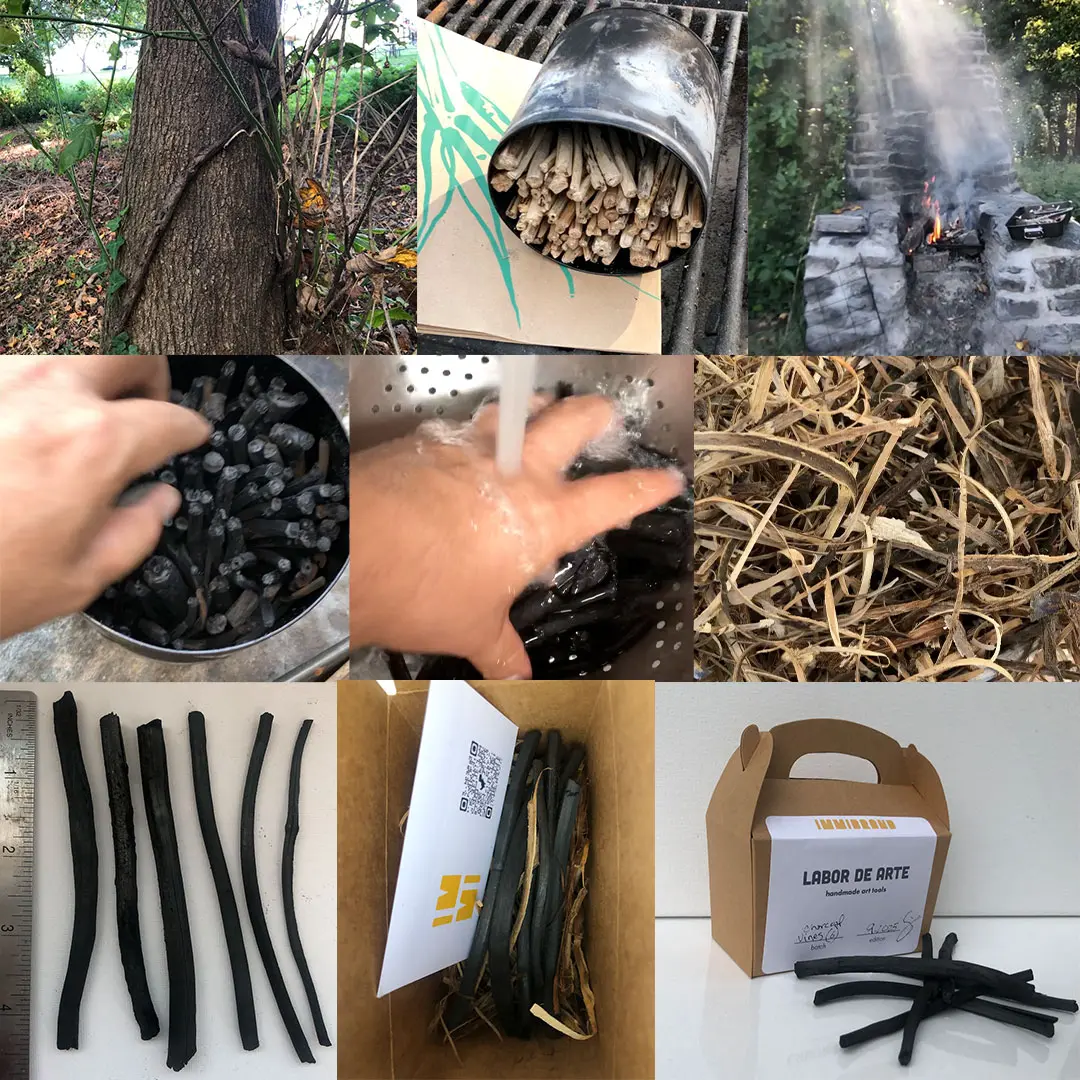
Three products run in parallel with the marketplace: Labor de Arte (physical handmade art materials), the Grants Search tool (Claude-powered grant discovery), and the course library (free seller education in Tutor LMS). Each serves a different layer of the same user: the artisan building an independent practice.
Labor de Arte
Labor de Arte is a collection of handmade art materials, but the concept behind it matters as much as the objects. It's a direct example of how we can look to our immediate environment to express transformative experiences. The material choice is not incidental: shoots and vines, specifically Oriental Bittersweet and Bamboo foraged in the DMV region, shaped by hand into dip pens and charcoal.
The underlying theme is identity and acceptance. Not immigrant identity specifically, though that's present in the work. The broader idea is that what gets labeled foreign, invasive, or out of place in one context can be the source material for something meaningful in another. You don't need to trace that reading back to immigration. The collection holds that tension without requiring anyone to resolve it the same way.
The production process follows directly from the material: vines stripped of bark, sized, cut, and carbonized into soft charcoal. Bamboo reeds shaped into dip pens, each suited to a different kind of mark. Vine shavings sterilized and used as packaging padding. Each piece is unique and imperfect. The variations are not corrected.
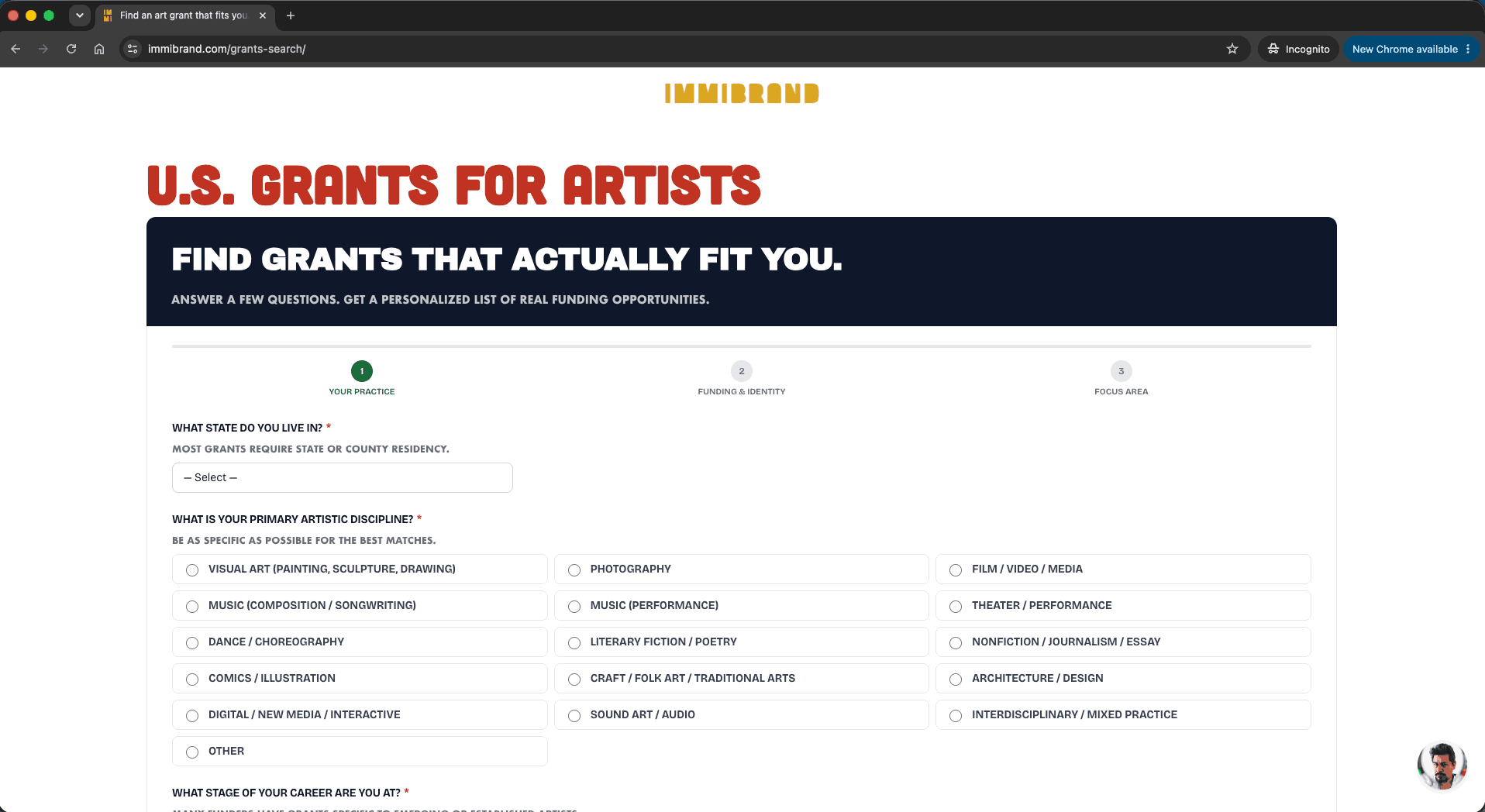
Grants Search
The grants search tool came out of a specific constraint: the marketplace is built for visual artists and artisans selling physical goods. Non-visual creatives, writers, musicians, performers, don't have a viable way to sell on Immibrand yet. But they still need resources. The grants search was the way to make something useful for a broader range of creative people without waiting for the marketplace to support every medium.
The technical path opened up when I found that grants.gov had an API. That made it worth building rather than pointing people to a static list: real federal grant data, queryable, combined with Claude's ability to search for foundation and private grants that the federal database doesn't cover. The result is an 8-question intake form that produces a personalized list matched to the applicant's state, discipline, career stage, identity affiliations, and thematic focus.
Under the hood this is the F! Grants WordPress plugin. The intake data is sanitized and passed to the FG_Grant_Runner pipeline, which checks a 48-hour cache keyed to the intake profile (not the applicant email), queries Grants.gov for federal opportunities, and then sends a targeted prompt to Claude via the Anthropic API with the web_search tool enabled. The resulting grant list is stored in the WordPress database, returned to the frontend as JSON, and rendered as a results report. The free tier returns the top 10 results; premium via Polar.sh unlocks the full list, shareable links, and admin export.
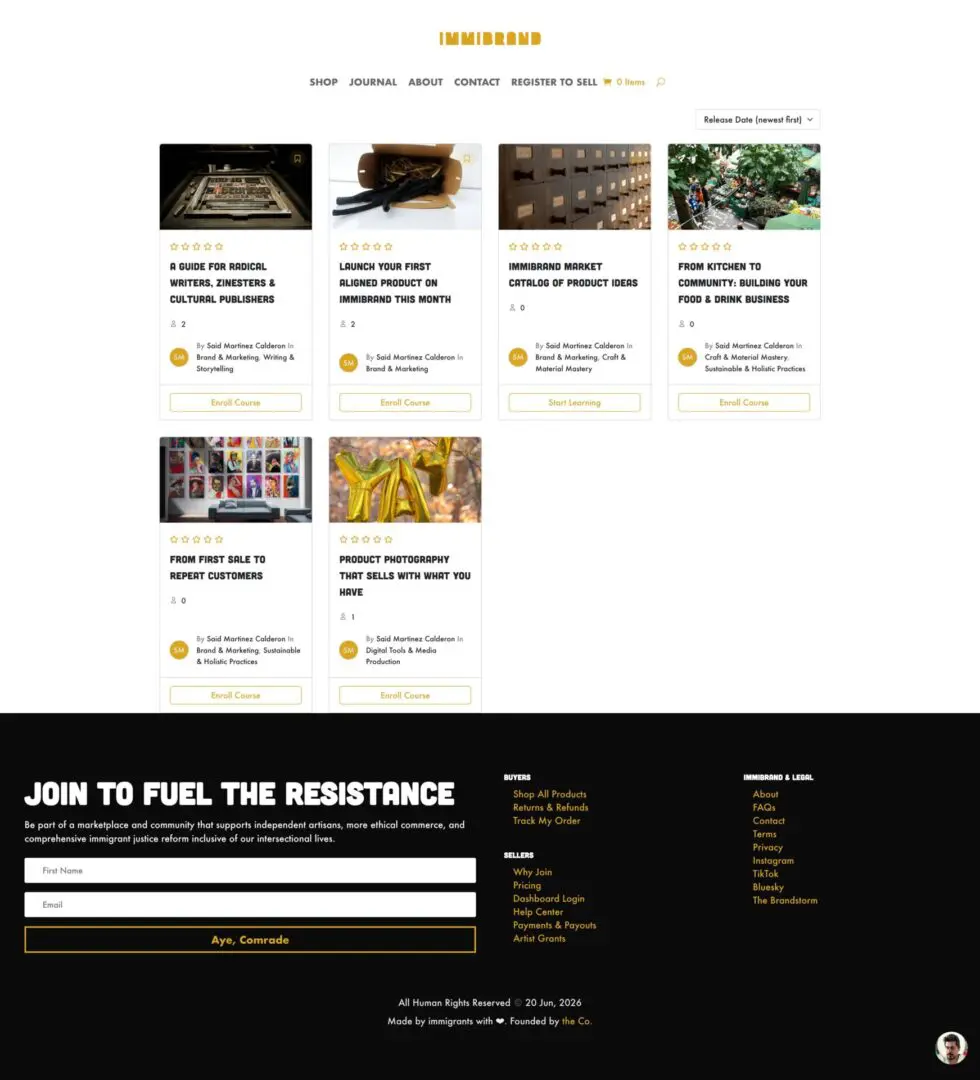
Free Course Library
Six courses run on Tutor LMS. They cover brand building on Immibrand, product photography with a phone, food and drink business fundamentals, building repeat customers, a market catalog of product ideas, and a guide for radical writers and zinesters. All are free and available without requiring an account for browsing; enrollment gates course progress.
The course library serves two functions: it builds out the seller pipeline (artisans who complete the onboarding course arrive with a clearer brand position and a better product listing), and it positions Immibrand as a resource layer rather than purely a transaction layer.
UX & Design
Immibrand's UX is shaped by one consistent tension: transparency versus friction. Where most marketplace interfaces obscure fees, restrict data export, or make leaving hard, Immibrand surfaces those things explicitly. The Etsy fee calculator on the /hola page is the most direct version of this: enter a sale price and see how the two platforms compare. No advocacy needed. The math does it.
Plans designed to push you out the door.
The four plan tiers are not designed to lock sellers into a subscription they can't leave. Phase 1 is free forever and fully functional for an artisan with up to 20 products. Phase 4 includes WooCommerce store setup and hosting on a 30-day free trial, which is an explicit off-ramp: the platform teaches you to operate independently and then helps you do it.
The copy on the pricing page says it plainly: "Unlike other platforms that want you to stay locked in, Immibrand is built to teach you how to grow beyond it." The design reinforces this by surfacing the free course library from the pricing page itself, connecting plan features to educational resources at every tier.
Product limits as quality signals.
The 20-product limit on the free plan reads as a restriction from the outside. The design intent is different: it pushes sellers to decide what their 20 best things are before adding more. Artisans who go through that constraint tend to have more coherent catalogs than those given unlimited listings from the start.
The limit also keeps the marketplace clean. A dropshipper or print-on-demand operation cannot build volume here without paying for it, and they are screened out at the application stage anyway. The product cap is the secondary enforcement.
8 questions, one report.
The grants search form is a single-page intake with progressive disclosure: required fields that narrow the search (state, discipline, career stage) appear before optional refinements (identity affiliations, fiscal sponsor access, thematic keywords). The form is designed to take under two minutes and produce results specific enough to be actionable. A generic list of art grants is not useful. A list filtered by state residency, career stage, and whether you're an immigrant artist is.
Brand

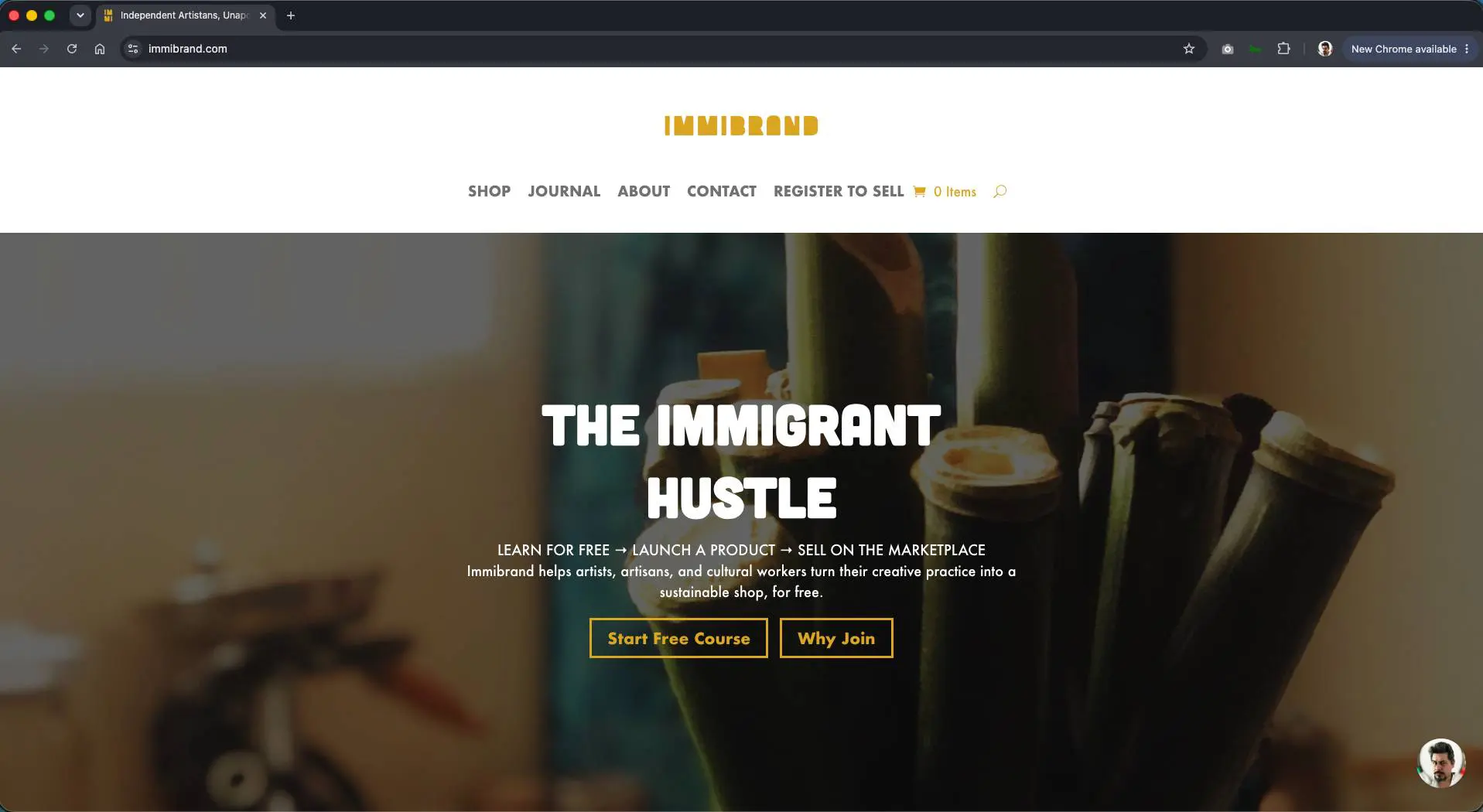
The tagline is still in motion. It started as "The Immigrant Hustle," which was accurate at the time and is now outgrown. Hustle culture as a frame has a ceiling, and it's not the right one for what Immibrand has become. The working concept is the three-step sequence already on the homepage: Learn for free. Launch a product. Sell on the marketplace. That's the logic of the platform in its simplest form, and it's more honest than a slogan.
The sequence is also the order of operations. The brand does not lead with the transaction. It leads with giving something away.
Political without the theatre.
The site copy is direct and personal. "I can only share with you what I believe to be a choice. You have to make it." That register runs throughout: first person, no corporate passive voice, no aspirational abstraction. The brand talks about Etsy's fee structure by name, which most "alternatives" won't do. It uses the word "resistance" without scare quotes. It says "made by immigrants with heart" in the footer.
The political positioning is consistent but not exhausting. The mission surfaces on the about page, the /hola page, and the product descriptions where it's relevant. The shop itself is a shop. The balance between advocacy and function is maintained by keeping the political content in the editorial layer and letting the product design do its own work.
Engineering
Immibrand currently runs on a third-party plugin for its most critical non-WooCommerce functions: WCFM for vendor management.
It's being replaced with two custom plugins that will be part of the F! Suite: F! Gallery for the marketplace layer and F! Grants for grant discovery.
The decision to build custom rather than extend third-party tools is architectural.
WCFM accumulates technical debt by wrapping WooCommerce at layers WooCommerce already handles (order lifecycle, refund flow, inventory).
Every WCFM wrapper is another surface where behavior diverges between what WooCommerce does and what WCFM does, and those divergences become bugs under edge cases.
F! Gallery is built on a "no double-work" rule: WooCommerce handles products, orders, and payments; the plugin handles only what WooCommerce doesn't cover.
F! Gallery - in development
F! Gallery is a WooCommerce multivendor plugin built for art marketplaces. Vendor type is artists only. One type. No dropshippers, no print-on-demand resellers. Every policy that defines what Immibrand is maps to an architectural decision in the plugin.
Commission rates are locked into the database row at order time. They never recalculate retroactively. Rate increases don't touch past sales. This is treated as a financial invariant: the one rate-changing failure mode that erodes vendor trust on other platforms is ruled out at the schema level.
Product limits are enforced server-side, not just in the UI. A vendor at their plan limit cannot publish regardless of how the request arrives. Direct API calls, bulk actions, and programmatic inserts all hit the same enforcement point.
Artist profiles are built to surface off-platform presence: social links are prominent, not buried. Artist statement and bio are separate fields because who someone is and what their work is about are different things. The discovery entry point is the artist page, not the catalog.
- Core: WooCommerce + HPOS compatibility
- Payments: Stripe Connect OAuth + automatic commission splits
- DB: fm_commissions, fm_payouts, fm_messages, fm_message_threads
- Roles: fm_vendor role, scoped product and order queries
- Auth: Certificates of authenticity, sold state, resale royalties
- UX: Front-end dashboard, artist profile pages, buyer messaging
F! Grants - active
F! Grants is the plugin powering the grants search tool on Immibrand. It is part of the F! Suite and shares the same Claude API key fallback chain as F! Insights: fg_claude_api_key, falling back to fi_claude_api_key, then fr_claude_api_key. One key anywhere in the suite works everywhere.
The architecture mirrors F! Insights in its pipeline structure: intake sanitization, cache check, external API call, Claude request with web_search tool, database persistence, JSON response to the frontend. Rate limiting, IP exclusions, structured logging, and a lock mechanism to prevent duplicate concurrent runs are all present in Phase 1.
Tech Stack
- Platform: WordPress + WooCommerce
- Vendors: WCFM (WC Frontend Manager and Dokan alternative)
- Courses: Tutor LMS
- Grants: F! Grants
- Payments: WooCommerce Stripe gateway
- Pending: F! Gallery
Economics
How the platform is projected to monetize
Immibrand hasn't turned a profit since I converted it to a multivendor marketplace (ask me why I stopped selling my portraits if you ever come across me in person).
It's a live project and a working concept: the platform exists, products have sold, and there have been successful conversions through the seller registration flow. But the user base is still being tested and the monetization model is still being validated in practice.
The plan for how it makes money is straightforward. Revenue comes from two sources: a sliding commission on sales and optional subscription plans for sellers who need more product slots and support. Phase 1 is free forever and generates no direct revenue. The seller on the free plan who sells 20 products at a 10% commission is the proof of concept, not a loss leader being pressured toward an upgrade.
Sliding scale, per item, locked at order time.
The commission is per line item, not per order total. A cart with a $200 print and a $1,200 original generates two commission rows at two different rates, both locked at time of purchase. The bands are operator-configurable in the F! Gallery plugin settings, but the default reflects the current Immibrand structure.
No listing fees. No fee for uploading photos or writing descriptions. No mandatory advertising. Stripe transaction fees are absorbed on the platform side, so sellers see one rate from Immibrand and sales tax from their shipping origin. That's the full cost picture. Sales tax responsibility sits with the vendor based on where they're shipping from.
When F! Gallery is released for commercial use by other collectives building their own marketplaces, the fee structure will be operator-configurable: admins will decide whether to absorb Stripe fees into the platform commission or pass them through to vendors, and how sales tax collection is handled. What Immibrand does is one set of defaults, not the only way to run it.
Four tiers, structured to encourage graduation.
Phase 4 is the off-ramp. A seller who reaches that tier has the product volume and revenue to justify their own hosted WooCommerce store. The plan includes setup and hosting for that store, which means Immibrand is literally building the infrastructure for sellers to graduate out of the marketplace. That's not an accident. It's the stated goal of the platform's economics.
VS Etsy: What the comparison calculator shows.
The /hola page runs an Etsy vs. Immibrand fee calculator. Etsy's structure: 6.5% transaction fee, $0.30 per transaction payment processing plus a percentage, $0.20 per listing, and for shops earning above a threshold, a forced 15% offsite ads fee on sales that come through Etsy's ad network. Immibrand's platform fee starts at 10% with no listing fee and no forced advertising.
The long-term savings projection across the platform is 55% over Etsy in total platform fees at comparable sales volume. The claim is documented. The calculator is on the page for anyone who wants to run their own numbers.
Artifacts
Where to see the work.
Everything below is live or in active development as of 2026.